Archive comparison · original material and a later reconstruction
The thread we picked up
Recovered designs, a reconstructed homepage, and the ideas returning in a new form.
A question across time
What survives when an old idea begins again?
Gameloom’s surviving designs reach back to 2012. Plans and a public homepage followed in 2013. The material recovered in 2026 shows an early ambition: make games, share worlds, and let players meet inside them.
The returning direction starts with distinctive games we author, connected by a shared engine. Community creation can grow from those foundations. The ambition still includes 3D worlds, browser and native players, multiplayer, and distributed execution.
2012Surviving designs
Logo files carry modification dates from May to October. They date the artifacts, not the exact beginning of the idea.
May 2013A technical plan
The outline and architecture drawings describe a browser studio, shared resources, and client/server execution.
June & August 2013A public face
The homepage was archived in June; its logo, styles, and font were archived in August.
October 2026Recovery and return
The originals were preserved, the homepage reconstructed, and the direction reconsidered.
Original designMay 2013
Where the work could happen
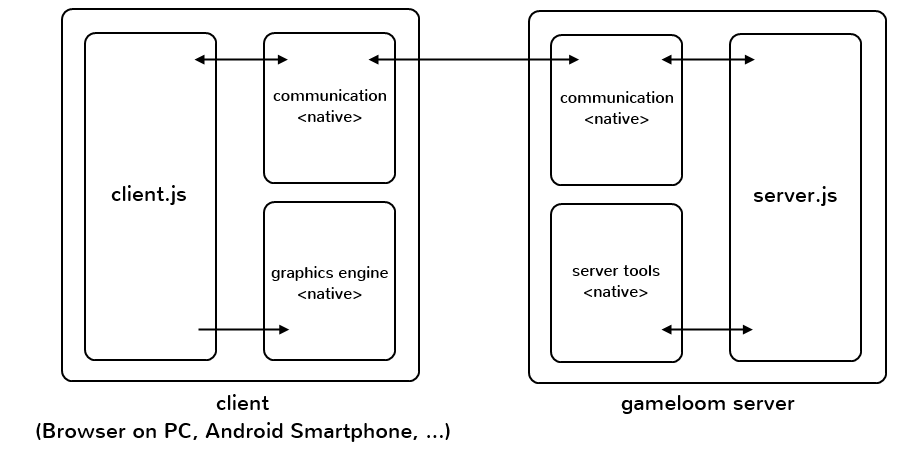
A diagram from the May 2013 plans, recovered from the original document in 2026. It records a proposed architecture; it does not show that the system was built or run.Read the drawing
The client and server each contain JavaScript. The client also has native communication and graphics components; the server has native tools. The plan separates responsibilities while making a shared game possible.
The image here is an unchanged copy of the recovered diagram. Open it for its original size.
Later reconstructionMade in 2026
How the idea introduced itself
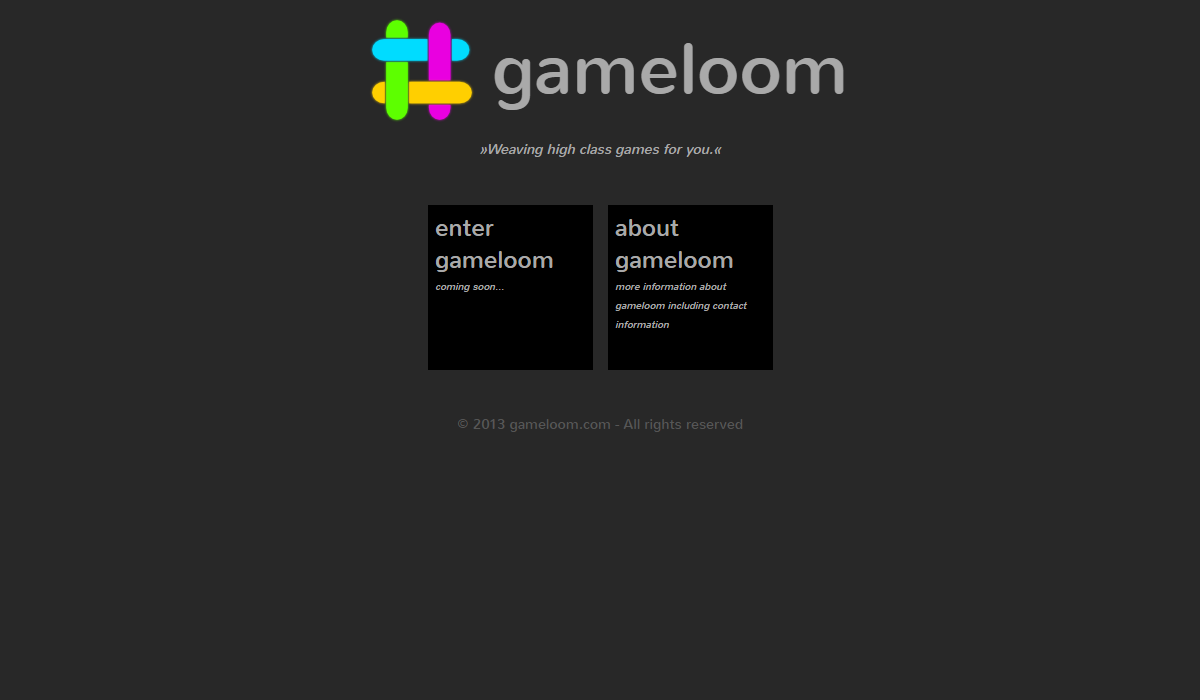
A screenshot made during the 2026 recovery of an offline reconstruction: homepage HTML captured on 6 June 2013, with original logo, styles, and font captured on 29 August 2013. This is not a screenshot taken in 2013.How the reconstruction was made
The recovered HTML was decoded for modern text display. The original font, logo, and styles were embedded; a missing favicon reference was removed, and the About link was pointed to its archived page. No archived JavaScript was run.
This public image is an unchanged copy of that recovery screenshot. The page advertised Gameloom as coming soon; the recovered material does not establish a platform launch.
Follow a thread
What carries forward, and what changes?
These comparisons connect a historical proposal with the present direction. They describe intentions across time, not a claim that the original plan became a finished engine.
Shared worlds
The 2013 proposal
Hosted multiplayer
A browser-based studio would keep resources on servers, divide work between client and server, and publish games for people to play together.
↝
The returning direction
Multiplayer at the foundation
Multiplayer and distributed execution are core requirements. The research asks how shared rules remain meaningful when different parts of a game run in different places.
Browser & native
The 2013 proposal
More than one way to play
The technical outline proposed browser or native players. Its architecture drawing gave native components explicit roles beside JavaScript.
↝
The returning direction
A shared engine across hosts
Browser and native worlds remain part of the ambition, with 3D as a foundational requirement. The research explores how common game meaning can survive different execution and presentation choices.
Who makes the games?
The 2013 proposal
A studio for programmers
The original audience notes focused on hobby programmers who already knew some programming. The plan joined making, hosting, and publishing.
↝
The returning direction
Our games lead the way
Distinctive games we author now lead the direction. Their different demands shape a shared engine; community creation can grow from the same foundations.